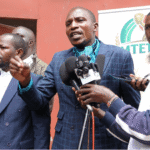



Senior Advocate Cecil Miller has extensively broken down the complex legal realities surrounding wills, trusts, inheritance, SACCO nominations and succession disputes in Kenya during a detailed webinar that attracted wide interest from professionals, SACCO members and families seeking clarity on estate planning.
The webinar titled “Wills, Trusts & Nomination of Beneficiaries” was held on Friday, May 15, 2026, at Mwalimu Towers, with Miller guiding participants through the legal framework governing succession under the Law of Succession Act.
While opening the session, Miller emphasized that succession law exists to ensure property devolves from a deceased person to rightful beneficiaries in an orderly and lawful manner.
“Succession provides the mechanisms by which property devolves from the dead owner to those left behind,” Miller explained during the presentation.
The senior advocate outlined the two main forms of succession in Kenya; testate succession, where a person dies after writing a valid will, and intestate succession, where a person dies without one. He warned that dying intestate often exposes families to prolonged disputes, litigation and uncertainty.
Miller explained that oral wills are only legally valid for three months unless they involve individuals serving in the military or at sea, who are exempt due to the nature of their work. Written wills, he stated, must be signed in the presence of at least two competent witnesses.
“In Kenya an E-signature is not recognized by law. It has to be physically present in the presence of the witnesses,” he noted while responding to questions from participants.
The presentation also addressed historical inequalities within inheritance law, particularly provisions that previously disadvantaged women. Miller cited landmark court decisions that struck down discriminatory succession rules.
“A woman’s right to inherit cannot be stripped away simply because she chooses to remarry. The law must treat husbands and wives exactly the same,” he stated while discussing the Ripples International case.
On property ownership, Miller explained the difference between joint tenancy and tenancy in common, clarifying that joint tenancy allows surviving owners to automatically inherit property without succession proceedings.
“In joint tenancy, everybody owns an equal part of the whole and acts as a single owner in legal matters,” he explained.
The senior lawyer strongly encouraged Kenyans to draft wills, saying they protect families from unnecessary conflict and expensive court battles.
“It is better to put your house in order than leave your beneficiaries at risk,” Miller concluded.
Miller also extensively discussed trusts, describing them as more flexible and private estate planning tools compared to wills.
“A trust allows you to have total estate continuity since it runs seamlessly through corporate frameworks or designated trustees without ever stalling,” he said. “Conversely, through a will, your beneficiaries are forced to go through a lawyer and the public, tedious probate court system.”
He further clarified that SACCO nominee declarations hold immense legal weight, warning members to carefully choose the individuals they list as beneficiaries.
“If a stranger not known to the family is nominated by a member then the SACCO by law must pay that individual regardless,” Miller stated during the interactive plenary session.
The webinar also covered taxation on inherited property, rights of surviving spouses and children, constitutional developments affecting succession law and the growing importance of proper estate planning in modern Kenyan society.