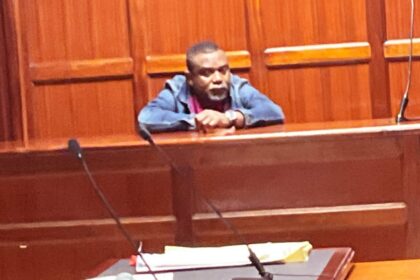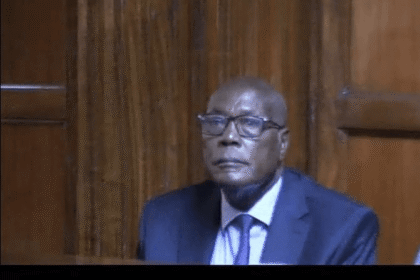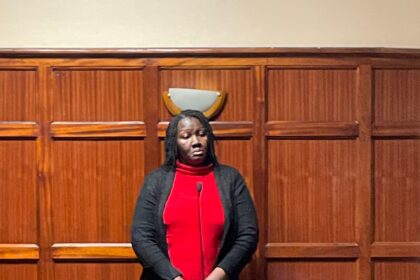


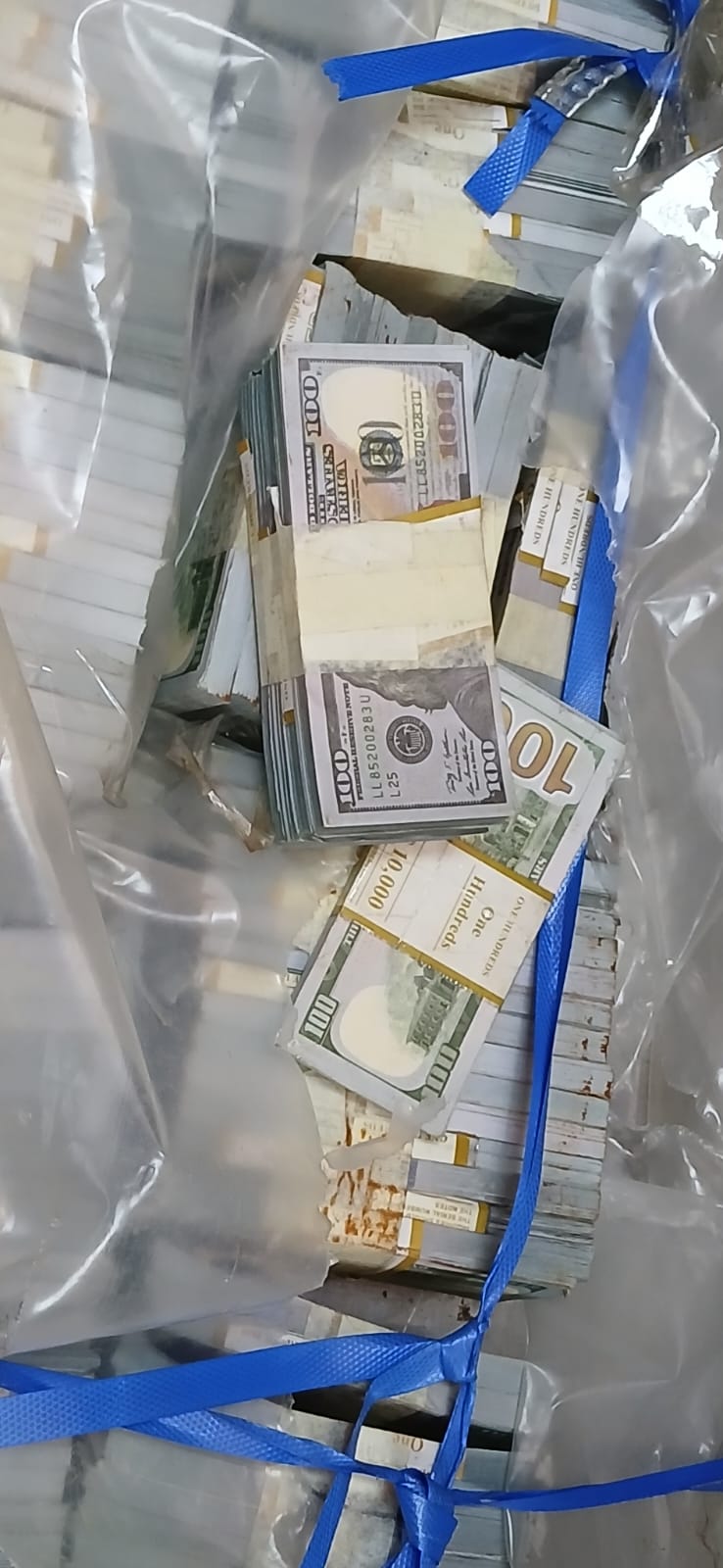
A Milimani Magistrates Court on Thursday was shown bundles of suspected counterfeit US dollars, allegedly recovered from suspects linked to a Nairobi-based gold fraud syndicate.
The exhibits—mainly in 100-dollar denominations—were physically produced in court as prosecution witnesses detailed an alleged scheme involving fake gold transactions, forged currency, and illegal firearms.
The suspects,Nelson Fru Che, Roland Johnson, Joseph Gikonyo, Alice Kavata, Ian Wekesa Mulongo, Duncan Muchai, and Police Constable Festo Akula Wamwayi—are facing several charges.


*Forensic examiner* *”They were just paper cut to resemble money.”*
Chief Inspector Martin Gitahi, a document examiner with the Directorate of Criminal Investigations (DCI), told the court that the examined items were not genuine currency.
He said the materials were received at the DCI documents laboratory on September 14, 2023, accompanied by an exhibit memo delivered by Sergeant Rhemas Musungu of the Operations Support Unit (OSU).
According to Gitahi, investigators submitted multiple items for analysis, including four metallic boxes, bundles of suspected US dollars, carton boxes, white papers, and pieces resembling Kenyan banknotes.
Among the items were six bundles of 100-dollar notes without serial numbers, alongside several pieces resembling Ksh1,000 notes.
“In my opinion, these were merely papers cut and sized to resemble US dollar notes,” he told the court.
*Missing security features flagged in analysis*
Gitahi explained that the suspected currency lacked key features found in genuine US dollars, including raised print, microprinting, and security threads.
He further told the court that some of the notes carried repeated serial numbers, while others lacked colour-shifting ink features.
“The denomination on genuine notes changes colour when tilted.
That feature was not present,” he said.
He also noted that under ultraviolet examination, the notes did not reveal any embedded security markers.
Instead, he said they “flourished brightly,” a characteristic inconsistent with authentic currency.
On the suspected Kenyan currency, he added that the items also failed basic verification checks.
“They lacked watermarks, security threads and microprinting.
They were simply papers cut and sized to resemble notes,” he testified.
*Defence questions handling of exhibits*
During cross-examination, Gitahi admitted he did not know who signed the inventory of the exhibits, saying he only recognised the officer who delivered them to the laboratory.
He also confirmed that no genuine sample notes were presented in court for comparison during his testimony.
When asked whether his findings were supported by external institutions such as the US Federal Reserve, he said his conclusions were based on forensic analysis and internal reference materials available at the DCI laboratory.
“We rely on genuine notes of major currencies provided through reserve authorities and internal reference systems,” he told the court.
*Firearm testimony also challenged*
The court also heard testimony from a ballistic witness regarding a firearm allegedly recovered during the operation.
The witness told the court that the gun had been issued in 2007 and reportedly stolen in 2009. He said he only learned of its recovery in 2023 while he was in Uganda, after suspects had already been arrested.
Under cross-examination, he said he was not aware whether a recovery circular had been circulated, stating he had no knowledge of such communication procedures.
*Accused face multiple charges*
These include conspiracy to defraud, possession of forged bank notes, possession of materials used for forgery, unlawful presence in Kenya, and possession of a firearm and ammunition without a licence.
Prosecutors allege the group conspired to defraud a complainant of USD 400,000 through a fake gold deal allegedly staged at a residence in Nairobi’s Garden Estate area.
The case continues as the prosecution presents additional witnesses.