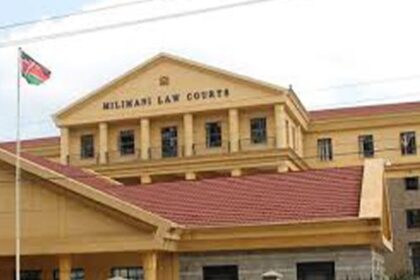


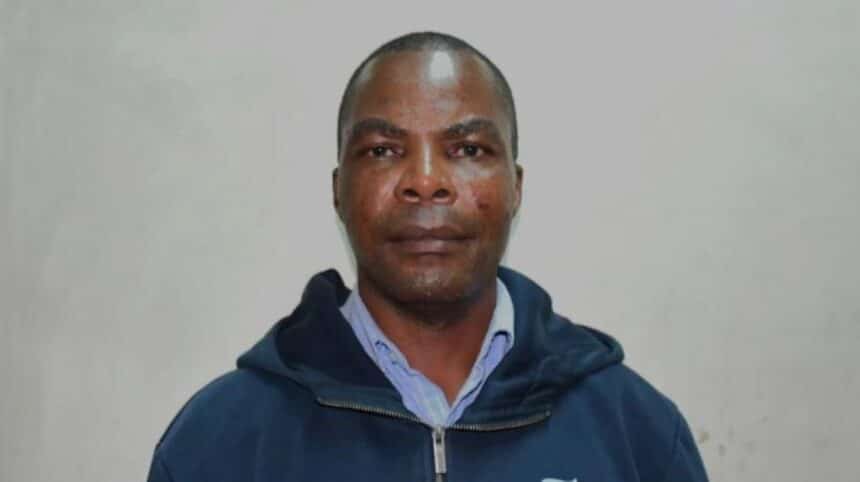
A Milimani Anti-Corruption Court has found former Independent Electoral and Boundaries Commission (IEBC) employee Luka Musamali Mukimi guilty of using a false university degree certificate to obtain employment and advance his career within the electoral commission.
In a judgment delivered by Chief Magistrate Harrison Barasa, the court convicted Mukimi of deceiving a principal, contrary to the Anti-Corruption and Economic Crimes Act, and uttering a false document, contrary to the Penal Code. However, he was acquitted on the separate charge of forgery after the court found there was insufficient evidence to prove he personally made the fake certificate.
The prosecution told the court that Mukimi submitted a Bachelor of Arts in Social Studies (Public Administration) degree certificate purportedly issued by Moi University when he was recruited by the IEBC in 2012. The document later formed part of his employment records and was relied upon during an internal staff redesignation exercise.
Questions over the certificate emerged after the Public Service Commission directed public institutions to verify the academic credentials of their employees. Upon receiving the document for authentication, Moi University informed the IEBC that the certificate was not genuine.
In his decision, Magistrate Barasa said the testimony from the university’s Acting Academic Registrar was credible and supported by official institutional records.
“The evidence of PW3 was not based on conjecture or personal opinion. Rather, it was founded on official University records maintained in the ordinary course of the University’s academic administration.”
The court noted that the university’s records revealed inconsistencies, including a graduation date that did not correspond with any official graduation ceremony, leading to the conclusion that the certificate was not authentic.
“Based on the testimony of PW3… it is my conclusion that the said document was a false document.”
Although the prosecution failed to prove that Mukimi forged the certificate himself, the court was satisfied that he knowingly presented it to the IEBC as a genuine qualification.
“The evidence irresistibly points to the conclusion that he did. The accused could not have been ignorant of his own academic history.”
The magistrate further observed that a university graduate would reasonably know whether a degree certificate had been lawfully issued.
“It is inconceivable that a person who has attained university-level education could innocently receive and present a degree certificate without knowing whether it had been validly issued to him.”
The court found that the false certificate enabled Mukimi to obtain employment-related benefits, including eligibility for promotion within the Commission, thereby deceiving his employer.
However, on the forgery charge, the court ruled that the prosecution had not established beyond reasonable doubt that Mukimi was involved in creating or falsifying the certificate, resulting in his acquittal on that count.
Before passing sentence, the court considered mitigation, noting that Mukimi was a first offender, had expressed remorse and that there was no evidence he received direct financial gain from the offence or that the IEBC suffered quantifiable financial loss.
Despite those mitigating factors, Magistrate Barasa stressed the wider public interest in protecting the integrity of academic qualifications used in public service.
“Offences involving the use of false documents undermine integrity, honesty, and public confidence in public institutions and must therefore attract an appropriate sanction.”
Mukimi was fined Ksh70,000 on the first count, with a default sentence of one year in prison, and Ksh40,000 on the second count, with a default sentence of six months’ imprisonment.