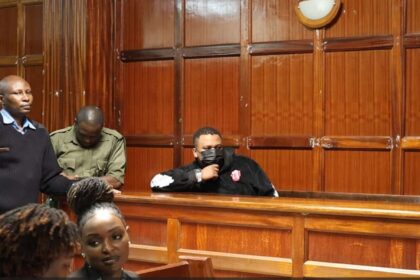


Bidco Africa founder and chairman Vimal Shah has given the Milimani Magistrate’s Court an account of how the company ended up losing Ksh102.4 million in a foreign currency transaction involving former Capital Markets Authority (CMA) chairman Nick Nesbitt.
Shah told the court that he agreed to the deal largely because of his longstanding relationship with Nesbitt, whom he had known for between 15 and 20 years through business and professional circles.


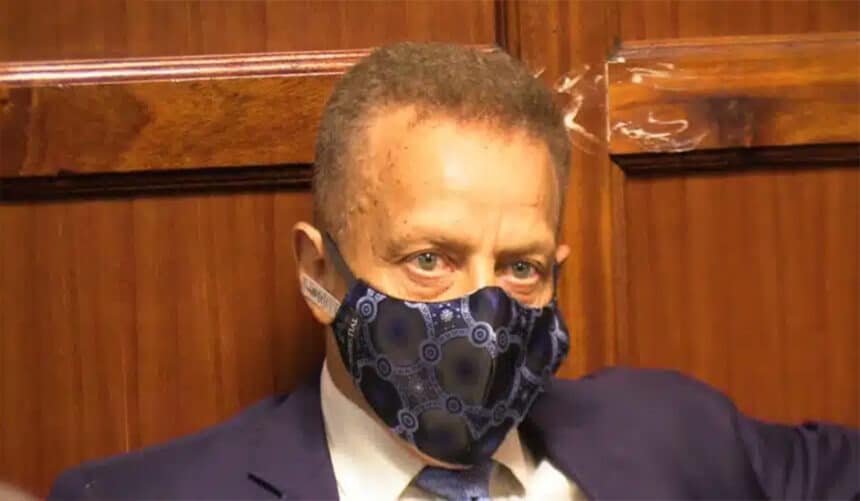
Nick Nesbitt … accused.
Nesbitt had introduced Shah to Bülent Boytorun, presenting him as his business partner and someone with expertise in converting currencies through cryptocurrencies and stablecoins.
Shah said he did not personally know Boytorun and would not have entrusted him with such a large sum without Nesbitt’s involvement.


“I trusted him because he’s a friend,” Shah testified.
He said Nesbitt’s previous work at IBM, their involvement in business organisations and his time as Capital Markets Authority (CMA) chairman all contributed to the confidence he placed in him.
According to Shah, the proposed arrangement was a currency exchange transaction in which Bidco would provide Kenya shillings and receive US dollars in return on the following day.
Bidco needed the dollars to pay for imported raw materials, Shah said, adding that the company was at the time struggling to obtain enough foreign currency through banks.
The parties agreed on the purchase of USD 745,000 at an exchange rate of 137.5, with May 24, 2023, designated as the value date.
A Trade Finance Support Agreement was signed on May 23, requiring the dollars to be deposited into Bidco’s US dollar account the next day.
Shah said Bidco fulfilled its side of the agreement by transferring Ksh102,437,500 to Bee N Bee Kenya Limited through RTGS on May 23.
The dollars, however, did not arrive as promised.
“On the 24th, nothing arrived,” Shah told the court.
He said the failure to receive the money was particularly significant because Bidco needed the foreign currency to purchase raw materials and maintain its operations.
Shah maintained that Nesbitt’s assurance was central to his decision to proceed with the transaction.
“I can say very openly here that without the trust, I would never have given this sort of money to a Mr. Bulent, who I didn’t even know,” he said.
The court also heard that Shah later came across advertisements in which Nesbitt was allegedly promoting a similar currency exchange business under the name BNX.
Shah said the advertisements offered customers an opportunity to exchange Kenya shillings for US dollars.
According to his testimony, the advertisements caught his attention because they appeared after Bidco had already transferred the Ksh102.4 million without receiving the promised dollars.
Shah said he confronted Nesbitt and questioned him about the money and why he had allegedly disappeared after the transaction.
He told the court that Nesbitt’s response was: “I got to make money.”
Shah further testified that he later learned Nesbitt was a one-third partner in the UK-based Bee N Bee company, which owned the Kenyan entity. He said this strengthened his understanding that Nesbitt and Boytorun were working together.
The court was also told that Nesbitt was a signatory to accounts associated with the business and had been involved in opening the accounts.
Shah said he had also sought reassurance from Standard Chartered Bank and was informed that Bee N Bee Kenya Limited had an account with the bank, further strengthening his confidence in the transaction.
The evidence is being presented in a criminal case in which Nesbitt is facing charges arising from the disputed transaction.
The hearing will resume on October 7, 2026.