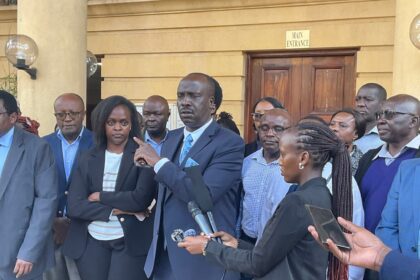

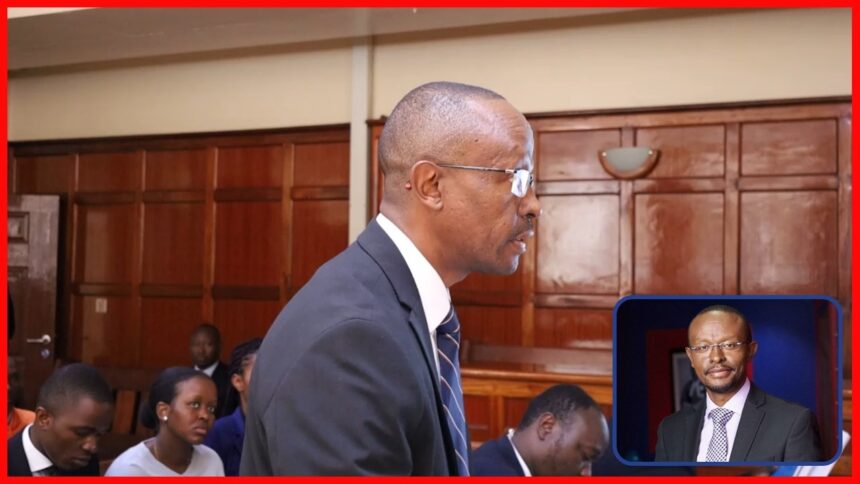
Kajiado County Government officials on Monday faced the threat of civil jail at the Milimani High Court as mitigation proceedings began in a long-running dispute over a multi-billion shilling decree owed to Kilimanjaro Safari Club Limited.
The matter, before High Court Judge William Musyoka, stems from a judicial review case filed in 2014, with the underlying dispute dating back to 2009. The court had earlier issued a notice requiring county officials to appear and explain why they should not be committed to civil jail for failure to settle the decretal sum.
Senior Counsel Cecil Miller, appearing for the Kajiado County Government, strongly pushed back against the contempt proceedings, maintaining that the county had not refused to pay the debt and was actively addressing the obligation within procedural frameworks.
“My lord… the county of Kajiado has not refused to make payments,” Miller told the court, adding that the issue was not defiance but a matter of process and statutory compliance.
He further submitted that significant payments had already been made towards the decretal sum, stating: “Payments have so far been made over 100 million shillings… the county is making provisions towards allocating budgets to pay for the same.”
Miller also challenged the legal basis of the contempt proceedings, arguing that the individuals cited by the applicant were not the proper parties under the law to be held liable for payment.
“There’s a clear and specific enforceable statutory duty… under Section 103(3) of the Public Finance Management Act,” he submitted, explaining that financial responsibility lies with the County Executive Committee Member in charge of finance, not the county secretary or county attorney.
He warned that proceeding against the wrong officials would amount to a miscarriage of justice, stating: “You will find yourself… proceeding with mitigation against people who have not been held in contempt as yet.”
Miller further argued that the court process had effectively reverted to an earlier position following a March 9, 2026 ruling, which, according to him, identified a specific individual previously found in contempt.
“The effect of this ruling… took us back to where now the person to be held in contempt was this gentleman… and contempt is personal in nature,” he submitted.
He maintained that the current application improperly sought to extend liability to new office holders who had neither been cited nor found in contempt by the court.
On the opposing side, Advocate Brian Mbula, appearing for the ex parte applicant, argued that the decretal amount remained unpaid despite years of litigation and court orders.
“The decretal sum… has not been paid… even to date,” Mbula told the court, insisting that continued non-compliance justified the contempt proceedings.
He further submitted that parties in contempt should not be granted audience before the court until they comply with existing orders, framing the dispute as a matter of upholding the rule of law.
The case has drawn significant attention due to the size of the decree, now reportedly exceeding Ksh1.2 billion, and the prolonged enforcement battle spanning over a decade.
With the court now tasked with determining both the validity of the contempt proceedings and the appropriate parties to be held accountable, the outcome could have far-reaching implications on how decrees against county governments are enforced, particularly in relation to statutory roles and financial accountability.
The matter is expected to proceed for ruling on 8,May 2026 as the court considers the applications and submissions from both sides.