
Millicent Awino and Peter Oyan, both members of the ministry associated with self-proclaimed prophet David Owuor, have threatened to file a class action suit against the Ministry of Health, Health Cabinet Secretary Aden Duale, the Kenya Medical Research Institute (KEMRI), the Ministry of Interior, and the Attorney General.
They claim they were previously diagnosed with HIV/AIDS at government health facilities but later tested negative—an outcome they attribute to what they describe as miraculous healing during religious crusades and prayer sessions.
*Claims of Healing Through Crusades and Broadcasts*
According to Millicent Awino, she first tested HIV-positive at Ulungu Dispensary and was placed on antiretroviral (ARV) treatment after confirmation at a second facility.
She alleges that her condition later changed after attending a televised prayer session linked to Prophet David Owuor, after which she believes she was healed.
Awino says a subsequent test at a sub-county hospital returned a negative result, and that further tests conducted at other facilities also confirmed she was HIV-negative.
Peter Oyan supported similar claims, stating that he tested HIV-positive in 2012 and remained on treatment until May 2014, when he says he was healed during a Menengai gospel crusade.
Both maintain that medical professionals play a key role in both diagnosis and confirmation of recovery.
“The people who identify that you are HIV positive are doctors. The people who will confirm that you have been healed are doctors.”
*Demand for Clarification from Health Authorities*
The two, together with other members of the Ministry of Repentance and Holiness, have written to the Ministry of Health and KEMRI demanding urgent clarification over what they describe as disputed HIV test results.
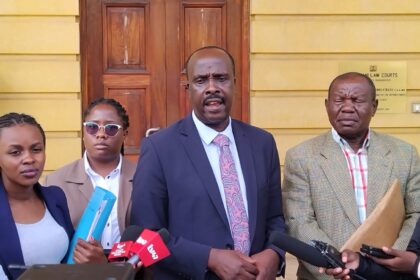
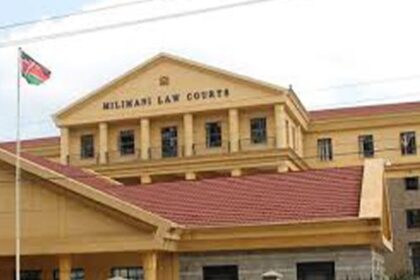
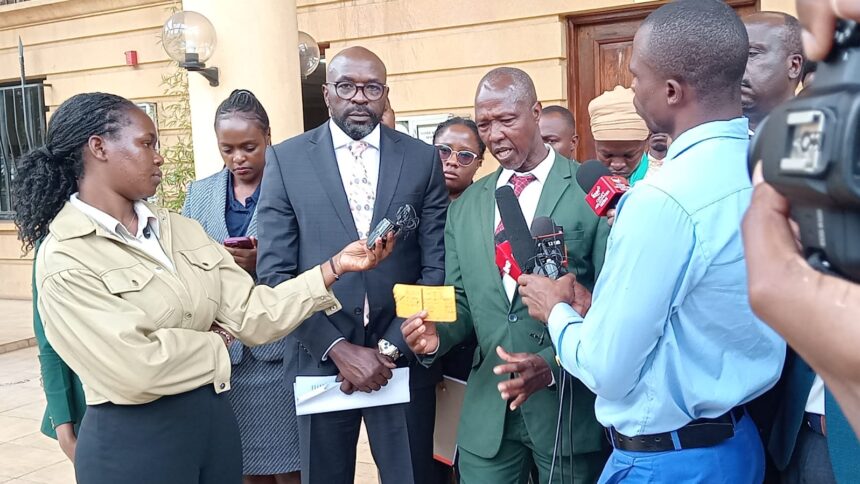
The demand was made public on May 6, 2026, outside Milimani Law Courts, where Awino and Oyan reiterated that their alleged healing took place during the Menengai mega crusade in Nakuru.
Awino says her experience followed a televised prayer broadcast, while Oyan maintains his occurred during a crusade at Menengai.
*Legal Team Questions KEMRI Findings*
In a demand notice dated May 6, 2026, Her lawyers Danstan Omari and Cliff Ombeta argue that KEMRI’s position contradicts existing medical records and Awino’s documented treatment history under Kenya’s national HIV programme.
They maintain that enrolment into antiretroviral therapy (ART), issuance of a Comprehensive Care Clinic (CCC) card, and initiation of treatment require confirmed positive HIV test results.
Medical History and Treatment Timeline
According to the legal team, Awino was diagnosed HIV-positive on September 14, 2023, at Ulungu Dispensary after presenting symptoms consistent with infection.
A confirmatory test at Usigu Health Facility also reportedly returned a positive result, leading to her enrolment into care and initiation of ART, which she is said to have adhered to.
The situation changed in December 2024 when she sought another test at a facility in Bondo following a televised crusade led by Prophet David Owuor. The results reportedly came back negative.
She subsequently underwent several additional tests at different health facilities, which also returned negative results, raising concern among health workers.
*Escalation and KEMRI Testing*
In 2025, the matter was escalated for further medical review.
A viral load test conducted months after she had stopped ART reportedly showed undetectable levels.
County and national health officials, alongside the National AIDS and STI Control Programme (NASCOP), later confirmed her treatment history and verified that she had been managed as an HIV-positive patient within the national system.
Further tests were conducted at KEMRI laboratories in Kisumu in January 2026.
However, the lawyers claim the results were not released and that Awino was recalled for additional sampling on several occasions.
Disputed KEMRI Letter
Despite the ongoing process, KEMRI later issued a letter dated April 20, 2026, stating that there was no evidence that Awino had ever been infected with HIV.
The lawyers argue that this conclusion contradicts Kenya’s HIV testing protocols, which require both screening and confirmatory tests before diagnosis and treatment can be made.
They further warn that the matter raises serious concerns about the integrity of the country’s HIV testing system, public trust in medical records, and institutional accountability.
*Position of the Petitioners*
Awino and Oyan maintain that they were initially diagnosed with HIV/AIDS at government facilities but later tested negative, which they attribute to what they describe as miraculous healing.
The petitioners insist that the matter requires urgent clarification from health authorities to reconcile conflicting medical findings and restore public confidence in HIV testing systems.