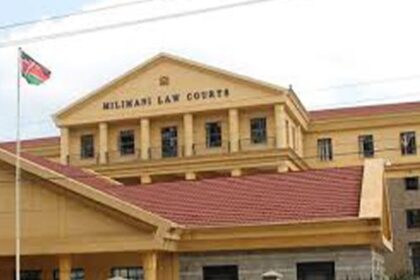


The High Court in Siaya has declared unconstitutional a decision by Ambira High School to compel every student to pay Ksh33,000 as a condition for readmission following a destructive student unrest, holding that the levy amounted to unlawful collective punishment and violated learners’ constitutional rights.
In a judgment delivered by Justice D.K. Kemei, the court found that the school’s Board of Management acted outside its legal mandate by imposing the levy without the approval of the County Education Board, the body legally empowered to determine conditions for students’ readmission after cases of mass indiscipline.
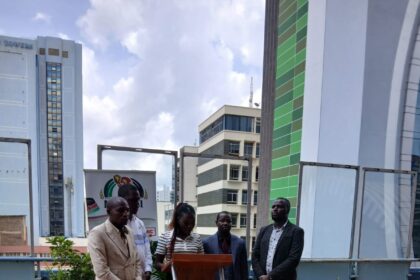
The consolidated petitions were filed by Michael Oluoch, Sylvester Oloo and other parents of students at the school, who challenged the legality of the levy after the institution demanded that each of its approximately 1,515 students contribute Ksh33,000 towards repairing property destroyed during unrest that erupted on the night of May 18, 2026.
The payment was made a mandatory requirement before students could return to class.
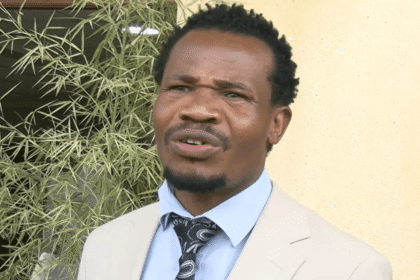
Appearing for the petitioners, Sylvester Odhiambo argued that the levy had been imposed without lawful authority, public participation or due process. He submitted that requiring every student to pay the same amount, regardless of whether they participated in the destruction, violated constitutional guarantees on equality, fair administrative action, due process and the right to education.
The court agreed, holding that the respondents had admitted they were unable to identify those responsible for the destruction and instead opted to impose the financial burden on all students equally.
Justice Kemei ruled that such an approach amounted to unconstitutional collective punishment, observing that the inability to identify individual offenders could not justify penalising innocent students.
The judge further held that the levy, though described by the school as compensation for damaged property, effectively operated as a punishment because payment was made a prerequisite for readmission. He found that attaching a monetary condition to a child’s return to school infringed the constitutional right to education and violated Articles 27, 29, 47 and 50 of the Constitution.
The court also rejected the school’s argument that parents had been adequately consulted before the levy was imposed, finding that the amount was ultimately determined during a meeting that neither parents nor their representatives attended.
Justice Kemei observed that meaningful public participation and procedural fairness were absent, rendering the administrative process constitutionally defective.
In the judgment, the court emphasized that the right to education cannot be conditioned on a family’s ability to pay an arbitrary financial demand, adding that public institutions are constitutionally obligated to facilitate, rather than hinder, access to education.
The dispute arose after widespread destruction of school property during the unrest, with repair costs estimated at about Ksh50 million. The Board of Management subsequently resolved that each student would contribute KSh33,000 towards the repairs before being readmitted to school. ,
The High Court allowed the petitions and declared the levy unlawful, reaffirming that disciplinary measures in schools must comply with the Constitution and cannot punish learners collectively for acts whose individual perpetrators have not been identified.