

A civil society movement has called for a national conversation on the future governance structure of Nairobi, arguing that the capital’s current administrative framework may no longer adequately reflect its growing role as Kenya’s political and economic hub.
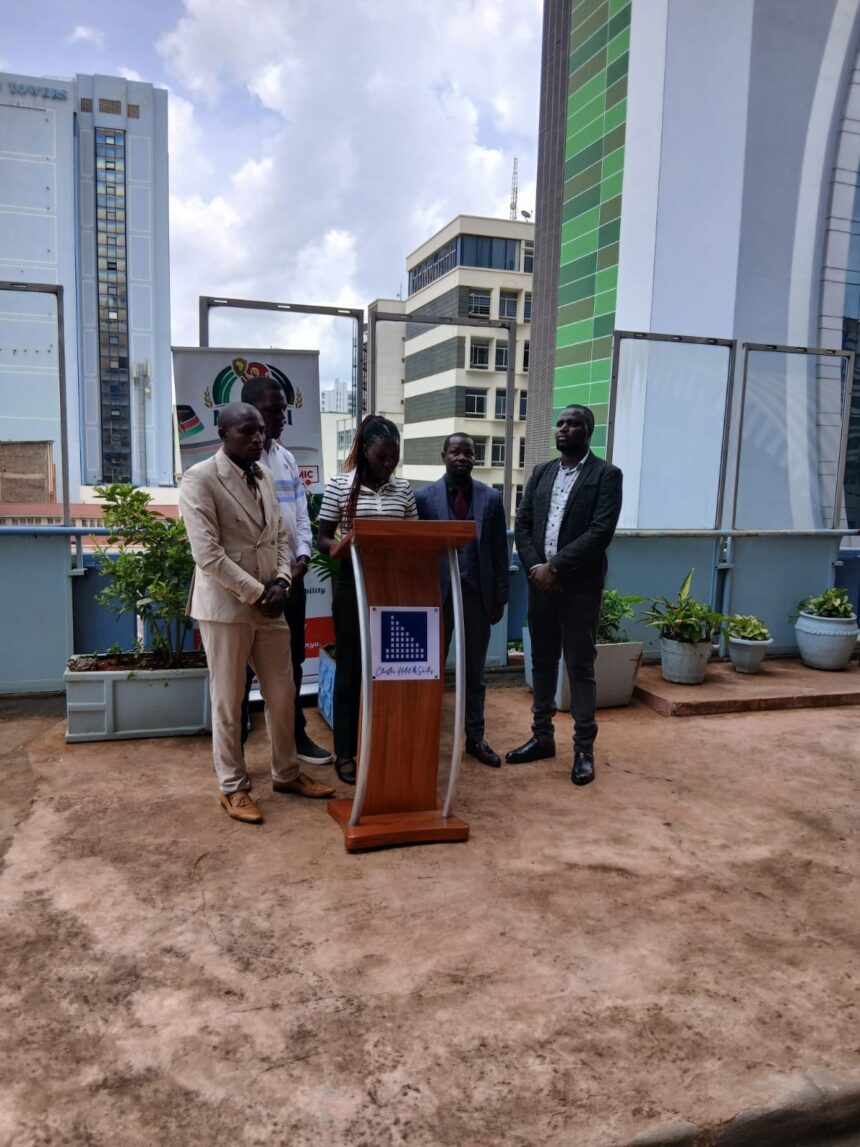
In a press statement released on March 14, 2026, Mtetezi, the Grassroots Economic Justice Movement, urged policymakers, residents and stakeholders to consider whether Nairobi should continue operating as a county or be restructured into a special metropolitan capital city.
The organization said Nairobi’s current governance model treats it like any other devolved county despite the city serving as the country’s administrative centre, economic engine and diplomatic hub.
Mtetezi noted that Nairobi functions as the centre of a wider metropolitan region that extends beyond its official boundaries into neighbouring counties including Kiambu, Machakos and Kajiado.
Every day, thousands of workers commute into Nairobi from towns such as Ruiru, Thika, Kitengela, Ngong, Athi River and Syokimau, creating what the movement describes as a single urban ecosystem that cuts across county lines.
However, the group said governance and planning in the region remain fragmented between multiple county administrations, creating challenges in areas such as infrastructure planning, transport coordination, and service delivery.
According to the statement, Nairobi’s infrastructure supports millions of commuters who reside outside the county, while planning decisions affecting the metropolitan region are often made independently by neighbouring counties.
The movement also pointed out that as the national capital, Nairobi hosts key government institutions, diplomatic missions and international organizations, placing responsibilities on the city that go beyond those of an ordinary county.
Mtetezi noted that successive national governments have repeatedly intervened in Nairobi’s administration in response to governance challenges.
In 2008, the government under President Mwai Kibaki created the Nairobi Metropolitan Ministry to address the rapid expansion of the city into surrounding counties and coordinate regional planning in areas such as transport, housing and infrastructure.
Later, in 2020, the administration of President Uhuru Kenyatta established Nairobi Metropolitan Services (NMS) after concerns over declining service delivery in the city.
The arrangement temporarily transferred key county functions to the national government in a bid to stabilize services including roads, sanitation and urban planning.
More recently, the government of President William Ruto has adopted a cooperation framework with the administration of Nairobi Governor Johnson Sakaja, focusing on joint investments in infrastructure, urban transport systems and sanitation services.
Mtetezi argues that these interventions demonstrate a consistent pattern: Nairobi’s governance challenges are closely tied to its role as both a national capital and a rapidly expanding metropolitan region.
The movement has therefore proposed opening a national debate on whether Nairobi should retain its current county status or transition into a special metropolitan capital city structure, similar to governance models used in cities such as Washington D.C., London and Abuja.
Under such a framework, Nairobi could have a Metropolitan Capital Territory responsible for managing the urban core while maintaining local representation and accountability.
The proposal could also involve the creation of a Nairobi Metropolitan Authority to coordinate regional planning across Nairobi and neighbouring counties in areas such as transport systems, housing development, environmental management and economic infrastructure.
Mtetezi suggested that the city could still retain an elected metropolitan governor, supported by a professional executive administration responsible for managing complex urban systems including public transport, waste management and metropolitan infrastructure.
The movement emphasized that the proposal is not intended to undermine devolution, but rather to ensure that Nairobi’s governance structure reflects its unique role within the country.
It called for broad public participation in the debate, involving Nairobi residents, neighbouring counties, businesses, civil society groups, urban planners and policymakers.
Mtetezi said the discussion is necessary as Nairobi continues to grow and its metropolitan region expands.
The statement was signed by Francis Awino, the National Convenor of Mtetezi – Grassroots Economic Justice Movement, who urged stakeholders across the country to engage in constructive dialogue on the future governance of Kenya’s capital city.