

Senetor Okiya Omtatah has moved to the High Court seeking to redefine the boundaries between investigative and prosecutorial powers in Kenya’s criminal justice system.
In Constitutional Petition No. E266 of 2020, Omtatah argues that the Director of Public Prosecutions (DPP) has overstepped constitutional limits by interfering with police investigations and the decision making process on whether suspects should be charged.
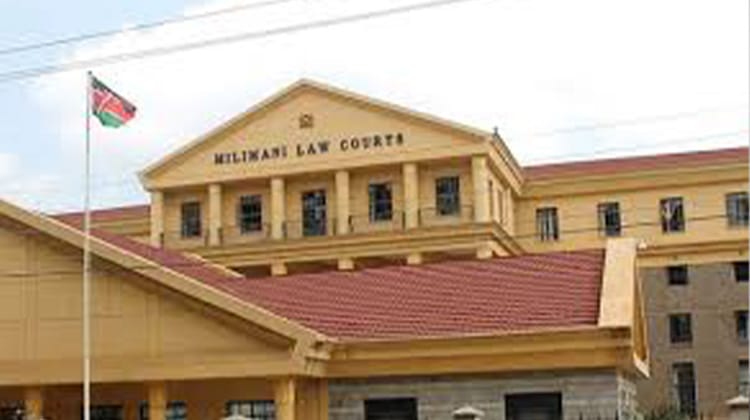
The case, filed before the Constitutional and Human Rights Division in Nairobi, names the DPP as the respondent, alongside the Inspector General of Police and the Attorney General as interested parties.
At the centre of the petition is Omtatah’s claim that the Constitution clearly separates the roles of the National Police Service and the DPP. He maintains that while police are mandated to investigate crimes and charge suspects, the DPP’s role begins only after a case has been formally presented in court.
Omtatah is challenging specific provisions of the Office of the Director of Public Prosecutions Act, 2013, as well as the DPP’s 2019 “Guidelines on the Decision to Charge,” which he claims are unconstitutional. He argues that these guidelines unlawfully give the DPP authority to influence investigations and determine whether suspects should be charged, functions he insists belong solely to the police.
He further contends that the DPP has no legal mandate to direct investigations, approve charge sheets before they are filed in court or require police to seek consent before charging suspects. According to the petition, such actions undermine the independence of the police and violate constitutional provisions that shield the Inspector General from external direction in operational matters.
The petitioner also raises concerns over what he describes as a breakdown of checks and balances, warning that allowing the DPP to play a role in investigations could open the door to abuse of power and selective prosecution.
Additionally, Omtatah faults the process through which the 2019 guidelines were developed, arguing that they were not subjected to proper public participation and were not published in accordance with legal requirements, rendering them invalid.
The case was partly triggered by public statements made by the DPP in 2020 regarding high-profile investigations, which Omtatah claims demonstrated unlawful direction of police actions.
In response, the DPP has defended his mandate, stating that the Constitution grants his office independent authority to institute and undertake criminal proceedings. The prosecution argues that its guidelines are meant to ensure consistency and accountability in decision-making and do not replace the role of investigative agencies.
The Attorney General has also opposed the petition, maintaining that the DPP’s powers are constitutionally grounded and that the challenged provisions of the law are valid.
The High Court is now tasked with determining whether the DPP’s role extends into the investigative phase, or whether such involvement violates the constitutional framework governing Kenya’s criminal justice system.


